Langtang Valley Trek
Be the first to review!
Kathmandu → Syabrubesi → Lama Hotel → Langtang Village → Kyanjin Gompa → Tserko Ri → Lama Hotel → Syabrubesi → Kathmandu → Departure
Overview
Langtang Valley Trek
Introduction
Langtang Valley Trek is a journey that takes you through lush forests, charming villages, and breathtaking alpine landscapes. while offering stunning views of the Himalayan peaks. Often called the Valley of Glaciers, Langtang is one of Nepal’s most scenic trekking destinations, blending adventure with cultural immersion.
Trek Curator ensures that the Langtang Valley Trek is not just about reaching a destination. Rather, it’s about experiencing the warmth of the Tamang culture, the serenity of Buddhist monasteries. The inspiring beauty of snow-capped mountains. Whether you’re a seasoned trekker or a first-time explorer, this trek welcomes you with open trails and unforgettable landscapes.
A Scenic Drive to the Gateway of Langtang
The journey begins with a scenic drive from Kathmandu to Syabrubesi, the charming gateway to Langtang Valley. As the road winds through terraced fields, traditional villages, and deep river gorges, you get the first glimpse of Nepal’s rural beauty. Meanwhile, the distant peaks of Ganesh Himal and Langtang Lirung stand as silent guardians, hinting at the adventure that lies ahead.
Immersing in Nature and Culture
The trek gradually ascends through dense forests of rhododendron, oak, and bamboo. The air is filled with the melodies of birds and the occasional rustling of langurs in the trees. Along the way, the Langtang River flows beside the trail, guiding you towards traditional Tamang settlements.
Eventually, you reach Langtang Village, once devastated by the 2015 earthquake. Today, it stands as a symbol of resilience, welcoming trekkers with its rebuilt lodges and warm hospitality. Furthermore, the influence of Tibetan Buddhism is evident in the fluttering prayer flags, intricately carved Mani walls. The journey then leads to the famous Kyanjin Gompa, a monastery nestled in the heart of the valley.
Reaching the Himalayan Heights
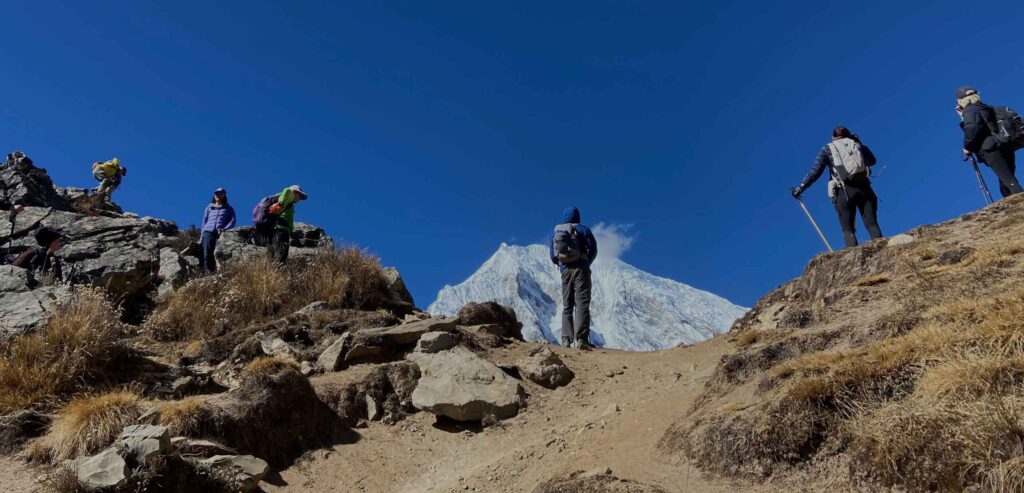
As you venture higher, the landscape transforms into a dramatic alpine wonderland. The short climb to Kyanjin Ri (4,773m) rewards you with panoramic views of Langtang Lirung, Dorje Lakpa, and Yala Peak. Moreover, for those seeking an even greater challenge, a day hike to Tserko Ri (5,000m) offers a breathtaking sunrise over the Himalayas, casting golden hues over the peaks.
A Journey Back with a Heart Full of Memories
Retracing your steps back to Syabrubesi, the descent allows you to soak in the beauty of the valley once more. The peacefulness of the journey, the cultural interactions, and the sheer magnificence of the Langtang region leave an everlasting impression.
As you return to Kathmandu, the memories of snow-covered mountains, starry nights, and warm local smiles stay with an experience that is not just a trek, but a journey of the soul.
Trek Curator invites you to discover the pristine beauty of Langtang, where each step connects you to nature and creates lasting memories. Are you ready to embark on this adventure?
Guide & Porter Services – Hire a guide and porter to carry your luggage and lead the way.
Trekking Equipment Rentals – Sleeping bags, down jackets, and trekking gear available for rent
✅ What's Included:
- Airport Transfers (Pick-up & Drop-off)
- Kathmandu to Syabrubesi Transport (Bus)
- Accommodation (Teahouses/Lodges during the trek)
- Meals (Breakfast, Lunch & Dinner during the trek)
- Trekking Permits (Langtang National Park Entry Permit & TIMS)
- Professional Guide & Porter (Guide with First Aid Kit)
- Necessary Trekking Equipment (Sleeping Bag & Down Jacket on rent)
- Emergency Support (Basic First Aid & Oxygen Cylinder)
❌ Price Excludes:
- International Flights (To/From Nepal)
- Nepal Visa Fees
- Travel Insurance (Mandatory for high-altitude trekking)
- Personal Expenses (Snacks, drinks, hot showers, WiFi, battery charging)
- Meals in Kathmandu & Pokhara (Except breakfast at hotels)
- Trekking Gear (Personal clothing, boots, trekking poles, etc.)
- Tips for Guide & Porter (Customary but not mandatory)
- Emergency Evacuation & Helicopter Rescue (If required)
- Extra Accommodation Costs (Due to delays, weather, or personal reasons)

Itinerary Overview
Day 1: Arrival in Kathmandu (1,380m / 4,527ft)
Day 2: Kathmandu to Syabrubesi (1,550m / 5,085ft)
Day 3: Trek to Lama Hotel (2,380m / 7,808ft)
Day 4: Trek to Langtang Village (3,430m / 11,253ft)
Day 5: Trek to Kyanjin Gompa (3,870m / 12,696ft)
Day 6: Hike to Tserko Ri (5,000m / 16,404ft)
Day 7: Trek to Lama Hotel (2,380m / 7,808ft)
Day 8: Trek to Syabrubesi (1,550m / 5,085ft)
Day 9: Drive Back to Kathmandu (1,380m / 4,527ft)
Day 10: Departure from Kathmandu
Detail Itinerary
Arrival in Kathmandu (1,380m / 4,527ft)
Welcome to Nepal! As your flight descends over the Kathmandu Valley, you get the first glimpse of snow-capped Himalayan peaks and lush rolling hills. Upon arrival at Tribhuvan International Airport, a Trek Curator representative will be there to greet you. After a short drive through the bustling streets, you will check into your hotel in Thamel, the vibrant heart of Kathmandu.
The rest of the day is free to explore the colorful markets, ancient temples, and cozy cafés. If you need any last-minute trekking gear, Thamel has plenty of shops offering everything from warm jackets to energy bars. In the evening, our team will brief you about the trek ahead. Enjoy a traditional welcome dinner, where you can try dal bhat, Nepal’s favorite trekking meal. A good night’s rest prepares you for the adventure ahead.
Kathmandu to Syabrubesi (1,550m / 5,085ft) – 7-8 Hours Drive
The journey begins with an early morning drive to Syabrubesi, the starting point of the Langtang Valley Trek. Leaving behind the bustling streets of Kathmandu, the road winds through terraced fields, small villages, and dense forests, following the course of the Trishuli River.
As we ascend into the hills, we pass by charming roadside towns like Kakani and Trishuli Bazaar, where locals sell fresh fruits and snacks. The drive gets more adventurous as we enter the Langtang region, with rugged mountain roads offering spectacular views of Ganesh Himal, Langtang Lirung, and other snow-capped peaks.
By late afternoon, we reach Syabrubesi, a small but lively village at the foot of the Langtang range. The cool mountain air and the sound of the river below signal the beginning of our trekking journey. After checking into the teahouse, we take a short stroll through the village, soaking in the peaceful atmosphere before dinner.
Trek to Lama Hotel (2,380m / 7,808ft) – 6 Hours
The trek officially begins as we leave Syabrubesi, crossing a suspension bridge over the Langtang River. The trail winds through dense forests of rhododendron, oak, and bamboo, where the sound of flowing water and birdsong creates a peaceful ambiance.
As we climb higher, the air gets cooler, and we may even spot red pandas, Himalayan langurs, and musk deer hiding among the trees. Passing through settlements like Domen and Pairo, we take short breaks to enjoy the surroundings.
The final stretch of the trail leads us to Lama Hotel, a quiet stop nestled among the trees. The cozy teahouses here offer a warm meal and a comfortable place to rest.
Trek to Langtang Village (3,430m / 11,253ft) – 7 Hours
Today’s journey takes us deeper into Langtang National Park, as the trail climbs steadily through lush forests and opens up to breathtaking mountain scenery.
We pass through Ghoda Tabela, a scenic clearing where the snowy peaks of Langtang Lirung (7,227m) first come into view. Herds of yaks graze in the meadows, and we start to notice prayer flags and Mani walls, signaling our approach to Buddhist settlements.
Continuing further, we pass through Thangshyap and Chyamki, small villages with stone houses and fields of potatoes and barley. Eventually, we arrive at Langtang Village, once devastated by the 2015 earthquake but now rebuilt with new lodges and a resilient community spirit.
As the evening sets in, the sight of prayer wheels spinning in the wind and the sound of distant yak bells create a peaceful setting for rest.
Trek to Kyanjin Gompa (3,870m / 12,696ft) – 2 Hours Hike to Kyanjin Ri (4,773m / 15,655ft) – 3-4 Hours (Optional)
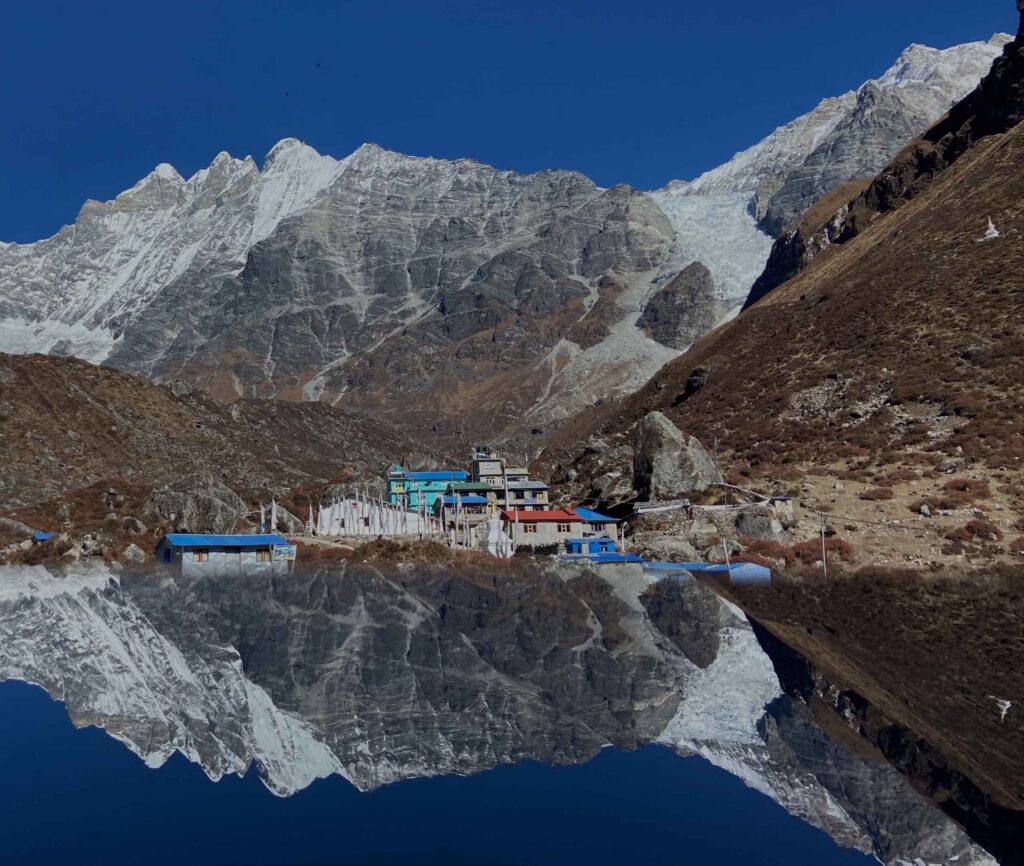
A short but rewarding trek takes us to Kyanjin Gompa, the spiritual heart of Langtang Valley. The landscape changes dramatically as we ascend, with glacier-fed rivers, rugged cliffs, and towering peaks dominating the surroundings.
Arriving at Kyanjin Gompa, we explore the famous Buddhist monastery and visit the local cheese factory, where fresh yak cheese is made using traditional methods.
For those with extra energy, an afternoon hike to Kyanjin Ri (4,773m) offers a breathtaking panoramic view of Langtang Lirung, Dorje Lakpa, and Yala Peak. The golden hues of sunset make this climb even more magical.
Hike to Tserko Ri (5,000m / 16,404ft) – 8-9 Hours
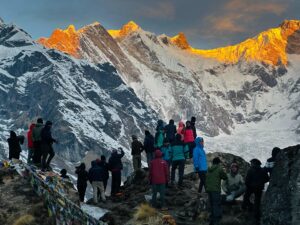
For the best sunrise views in Langtang, we start early for the hike to Tserko Ri, the highest point of our trek. The trail is steep and demanding but rewarding beyond words. As we ascend, the morning light paints the snowy peaks in shades of gold and pink, creating a surreal landscape.
From the summit, the view stretches across the Langtang Himalayas, Shishapangma in Tibet, and even distant peaks in the Annapurna region. After taking in the mesmerizing sight, we descend back to Kyanjin Gompa for a well-earned rest.
Trek to Lama Hotel (2,380m / 7,808ft) – 6-7 Hours
After days in the high mountains, we begin our descent. Retracing our steps, we pass through Langtang Village and Ghoda Tabela, taking time to appreciate the scenery from a different perspective. The trek down feels easier, allowing us to enjoy the lush forests and gushing rivers once more.
Arriving at Lama Hotel, we settle in for a final night in the heart of the Langtang wilderness.
Trek to Syabrubesi (1,550m / 5,085ft) – 4-5 Hours
The final trekking day is a gentle descent back to Syabrubesi. Walking through familiar trails, we take our time, soaking in the last views of misty hills, rushing rivers, and prayer flag-draped trails.
Reaching Syabrubesi by midday, we celebrate the successful completion of our trek with a delicious meal and a relaxing evening in the village.
Drive Back to Kathmandu (1,380m / 4,527ft) – 6-7 Hours
After breakfast, we board our vehicle for the return drive to Kathmandu. The journey offers one last chance to admire Nepal’s rural landscapes, terraced hills, and winding rivers.
Back in Kathmandu, you can enjoy a hot shower, a comfortable bed, and a farewell dinner with our team. Celebrate the incredible journey you’ve completed before departing the next day.
Departure from Kathmandu
As your adventure in Nepal comes to an end, a Trek Curator representative will transfer you to the airport for your onward journey. As you board your flight, you leave with memories of towering peaks, peaceful valleys, and warm local hospitality—a journey that stays with you forever.
Are you ready to embark on the Langtang Valley Trek? Trek Curator ensures every step of your adventure is safe, memorable, and rewarding. Let’s make this journey unforgettable!
Additional Information:
Permit and Visa
To embark on the Langtang Valley trek, trekkers are required to obtain specific permits. The essential permits include the Langtang National Park entry permit, mandatory for all visitors heading into the Langtang region, and a TIMS card (Trekkers’ Information Management System) to ensure your safety and maintain a trekking record. You can easily secure both permits through a registered trekking agency like ours. Most travelers can obtain a tourist visa on arrival at Tribhuvan International Airport in Kathmandu. For quicker processing, an online visa is also available through the official Nepal Immigration website. You’ll need a valid passport (with at least six months’ validity), passport-sized photos, and the visa fee in USD cash.
Transportation
Traveling from Kathmandu to Syabrubesi, the trek’s starting point, offers both public and private transport options. For public transport, you can take a local bus or jeep, which typically takes around 6 to 7 hours via Trishuli Bazaar. For a more comfortable and quicker journey, consider private vehicles, which can be arranged through tailored trekking packages. Additionally, chartered helicopters are available for scenic transfers or in case of emergencies.
Accommodation
Along the trail, you’ll find tea houses and lodges offering basic accommodations with twin beds, blankets, and shared bathrooms. Facilities include hot showers for an extra charge and access to electricity and charging services (also for a small fee). Some villages offer Wi-Fi, though it may be slow or unreliable. Meals during the trek feature traditional Nepali dishes (like Dal Bhat), Tibetan bread, noodles, soups, and a selection of western cuisine, with vegetarian and vegan options to cater to all preferences. Boiled, filtered, or bottled water is available for purchase, and it’s wise to bring along water purification tablets.
Best Season
The best times to trek are:
– Spring (March to May): Enjoy pleasant weather, blooming rhododendrons, and stunning mountain views.
– Autumn (September to November): Experience stable weather conditions, clear skies, and exceptional visibility.
– Winter (December to February): While it gets colder, you’ll find fewer trekkers and more peaceful trails.
– Monsoon (June to August): Although the landscapes are lush, be cautious of leech-infested trails and potential landslides.
Booking Policy and Required Documents
It’s highly recommended to book your trip in advance, especially during peak trekking seasons, to ensure accommodation availability. The booking process requires a valid passport copy, travel insurance (including emergency helicopter evacuation), passport-sized photos for trekking permits, and emergency contact information. For payment, we accept bank transfers or online payment methods.
For Booking & Cancellation Policy: click here
Emergency Evacuation and Safety Tips
Altitude sickness may be a concern above 3,000 meters, so it’s crucial to acclimatize properly and stay hydrated. Keep contact numbers for local guides and your travel agency on hand. In emergencies, helicopter evacuations are available from Kyanjin Gompa or nearby areas, but they must be included in your travel insurance. Make sure your travel insurance covers high-altitude trekking (up to 4,500 m) and includes emergency evacuation. Basic health posts are available in some villages, while more advanced hospitals are located in Kathmandu for serious cases. If you experience symptoms like headaches, nausea, or dizziness, inform your guide right away.
EQUIPMENTS
- 2 moisture-wicking t-shirts
- 1–2 thermal tops (merino/synthetic)
- 1–2 thermal bottoms
- Fleece jacket or pullover
- Lightweight insulated jacket (down/synthetic)
- Waterproof jacket (Gore-Tex or similar)
- Waterproof pants (especially in monsoon)
- 3–4 pairs trekking socks
- 1 warm trekking pant (for higher altitude)
- 2 trekking pants
- Warm beanie
- Buff/neck gaiter
- Gloves (inner + insulated outer)
- Sun hat/cap
- Broken-in waterproof trekking boots
- Camp shoes/sandals
- Gaiters (winter/monsoon)
- Microspikes (if trekking in winter Dec–Feb)
- Sleeping bag (-10°C to -15°C recommended in peak seasons)
- Lip balm with SPF
- Sunscreen (SPF 50+)
- Sunglasses (UV protection – strong mountain sun)
- Headlamp (with extra batteries)
- Trekking poles
- 2 water bottles
- Water purification tablets or filter
- 40–50L backpack (if carrying yourself)
- Duffel bag (if hiring porter)
- Rain cover
- Dry bags or packing cubes
- Toothbrush, toothpaste
- Wet wipes
- Hand sanitizer
- Quick-dry towel
- Basic first aid kit